As games become ever more multithreaded, Intel's hybrid CPU design might start to lag behind AMD's s
Published: January 01, 0001
AMD and Intel have taken very different approaches to increasing the core counts of their processors. In the case of Team Red and its CPUs, it went down a chiplet route, putting a block of cores and cache into one tiny chip, that can be easily doubled or more to get extra cores.
Intel, on the other hand, decided that it would stuff two different types of cores into its chips and, even though it now uses a tiled/chiplet approach for its latest processors, the 'hybrid' architecture shows no sign of changing. In fact, it's become even more hybrid than it was for the original design in that appeared in 2021.
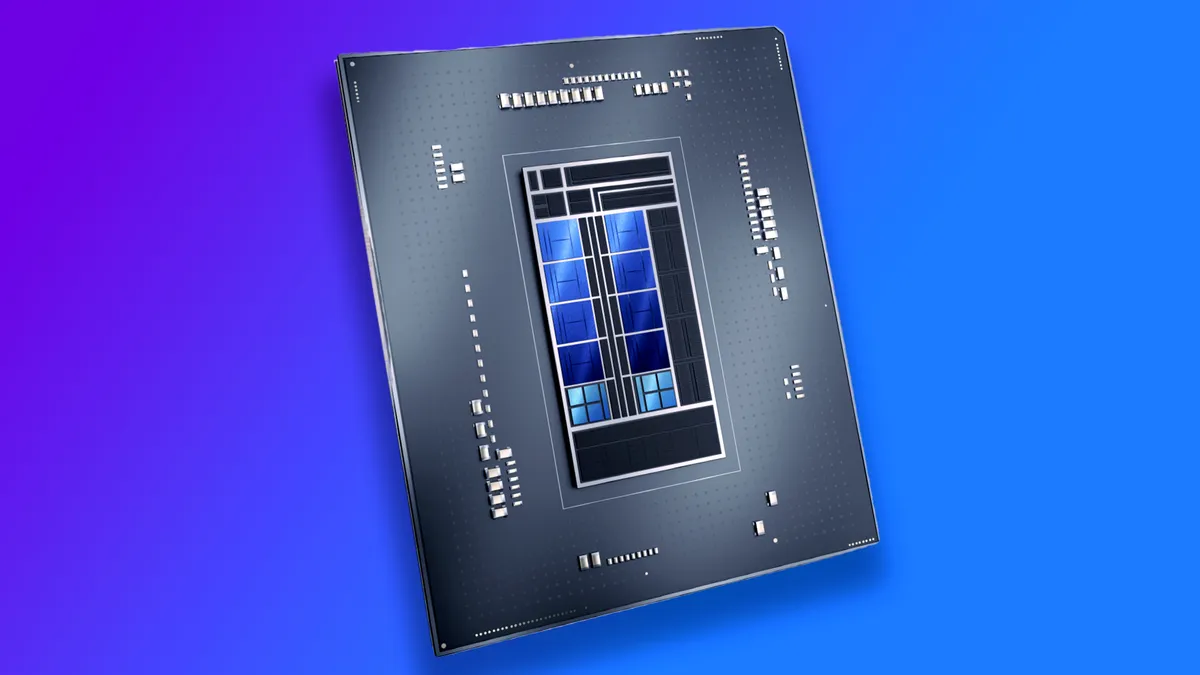
From the very start of this hybrid approach, games have required an extra helping hand, either from Windows or Intel software (IAO, ), to make sure that crucial threads are processed by the P-cores only. However, in the past few years, the number of threads games rely on has increased substantially and with the loss of hyperthreading in Arrow Lake, E-cores are now coming into play a lot more.
To show you what I mean, I've sampled the CPU usage of two high-end PCs in five different games. One rig is a CyberPowerPC, with a CPU and graphics card. The other is a setup, with an handling all the pixels. Sure, they're far from being equivalent platforms, and it's unfair to pitch the $477 against the $323 265K.
However, I'm not looking at performance here; I'm just looking at how the CPU's cores are getting used. Of course, CPU utilization graphs in Task Manager tell you absolutely nothing about how 'hard' those cores are being used and if one is showing 100% utilization, it doesn't mean that it can't be used further.
In the videos below, you'll see core utilization for the Ryzen 7 9800X3D on the left, and the same again for the Core Ultra 7 265K on the right.
Cyberpunk 2077 CPU usage
Let's start with a classic, . As a massive open-world game, replete with hundreds of objects and characters constantly moving about, you'd expect it to be very heavy on the CPU. To a certain extent, it is, but once you crank up the graphics settings, that central processor takes a back foot to the GPU.
I've recorded the usage with CP2077 at 4K and maximum graphics settings (i.e. path tracing), along with DLSS Quality and frame generation enabled. You can clearly see that none of the cores in the Ryzen 9800X3D are being significantly utilized, bar the first and third cores.
Task Managers display logical processors in order of core 1 (thread 1, thread 2), through to core 8 going from left to right, top to bottom. Since the Core Ultra 7 265K doesn't support simultaneous multithreading, the logical processors are the actual cores.

For all Arrow Lake chips, Task Manager goes P-core 1, P-core 2, then E-cores 1 to 4, followed by P-cores 3 to 6, then E-cores 5 to 12, and finishes with the last two P-cores (7 and 8)
Cyberpunk 2077 is coded to push threads onto P-cores in hybrid CPUs and you can see this u31.com เข้าสู่ระบบ quite clearly, with P-1 and P-5 under the most utilization, followed by all of the other P-cores being worked roughly the same. The E-cores are doing something but it's nothing very heavy, it seems.
HWInfo64 shows the clock speeds for the various cores (note that it starts at core 0, which is how it's technically measured out) and for the Ryzen 7 9800X3D, it also shows which are the 'preferred' cores—these are the ones that Windows will direct threads to as a preference. As you can see, cores 0 and 3 are being utilized a little more than the others, but it's a stark contrast to the 265K.
Stalker 2 CPU usage
uses Unreal Engine 5 for everything and it can churn quite a few threads, mostly for handling the parallel issuing of command lists for the graphics. Just like CP2077, Stalker 2 is a massive open-world game and its CPU workload is clearly higher than Cyberpunk's.
Both the 9800X3D and 265K are being worked hard here at 4K, maximum settings, with DLSS Quality and frame generation, but the Arrow Lake chip's P-cores are once again taking the brunt of the processing. Where the 9800X3D has plenty of capacity to absorb an increase in CPU utilization, the 265K is somewhat limited by the fact that it only has eight P-cores for eight threads.
Assassin's Creed Shadows CPU usage
Another open-world game, another engine, but it's a similar story in . However, note that some of 265K's E-cores are being utilized almost as much as the P-cores, though again we can see that P-1 and P-5 are the favoured cores for the game's primary threads.
After the 40-second mark in the video, the CPU utilization settles down and both chips have spare capacity; more on the Ryzen than the Core Ultra, but it doesn't seem like the use of the E-cores in Shadows causes any problems.
The Last of Us Part 2 Remastered CPU usage
While the three games we've seen so far haven't been especially heavily multithreaded, that all changes with . It has multiple threads for handling its asset streaming system, which leverages DirectStorage to reduce the CPU overhead, along with more threads for conducting background shader compilation.
Three of the Ryzen 7 9800X3D's cores are significantly loaded up, with a further two not that much less. The remaining three cores (don't forget that two graphs in Task Manager here represent two threads on one core) operate between 40% and 50% utilization, which is notably more than what we've seen so far.
The E-cores in the 265K are also being tasked more than in the other games, though the first four aren't doing a great deal, but once again, it's those two P-cores that are being loaded right up.
Microsoft Flight Simulator 2024 CPU usage
I've saved the best to last! throws a wall of threads at the CPU and it's an absolute torrent in the first 30 seconds of the flight. Asset streaming, netcode handling for world downloads, and complex flight dynamics all want a sizeable share of the processor's capabilities.
Things eventually settle down and both chips have all their cores utilized by around 40% or more, and in the case of the 265K's P-cores, it's considerably more. To the point that if the game asked more of them, it's possible that they wouldn't have the capacity and the slower E-cores would feel the squeeze.
Are hybrid CPU designs good enough for gaming?
Yes, this is just a handful of examples, and it's certainly not a scientifically-balanced comparison, but I have examined other games and there's a definite trend towards heavier multithreading. I'm sure some of you will be thinking "About time!" because we've had eight-core, 16-thread chips for years now.
All of this has got me wondering about Intel's hybrid CPU architecture, especially now it's all hyperthreading-free. The E-cores in Arrow Lake are certainly very capable but it comes down to one simple question: Is it better to have one core handle two game threads or two different cores handle them instead?

The former is a simpler approach and it's one that Windows PCs and consoles have been designed around for many years. We're far off ever needing a CPU with support for more than 16 threads, but in the case of AMD, its main gaming chips process every thread with near-equal levels of capability.
Not so in the case of Intel where you ideally want the P-cores to be doing everything. However, you're only getting eight of them, for eight threads, and once they're loaded up to the hilt, the slower E-cores have to get used. In the case of The Last of Us Part 2 and Flight Simulator 2024, they're getting used regardless of core preference.
I think it's fair to assume that Intel will retain its hybrid design for many years to come; likewise, it's safe to assume that E-cores will always be less capable than P-cores (otherwise they'd just be classed the same). That means in the not-too-distant future, games that generate more than eight heavy threads are potentially going to run slower on Intel chips than AMD ones.

: The top chips from Intel and AMD.
: The right boards.
: Your perfect pixel-pusher awaits.
: Get into the game ahead of the rest.
Or are they? After all, two threads on one core have to share resources (cache, logic units, etc), so they're not necessarily processed at the same rate. It's possible that two threads on a Ryzen core get churned out at u31 ทางเข้า roughly the same rate as two u31 เข้าสู่ระบบ threads on an Intel P- and E-core. It would need significantly more investigating to know this for sure.
If I were a game developer, I doubt I would have the time to do this properly so I'd have to rely on AMD and Intel's engineers to ensure that their processors all behave as expected. Predictability helps save time in fine-tuning performance and it's perhaps one aspect of why Microsoft and Sony used AMD CPUs in their consoles.
With rumours pointing to (Core Complex Die) for Zen 6, rather than the current eight, Intel's hybrid approach might just find itself lagging ever further behind the simpler but clearly effective design. How Team Blue responds to this, if it comes to pass, will be interesting to see.
Recommended Reading
There’s more to Warhammer 40k: Darktide than smashing cultists and chaos mutants into a fine paste. As of today’s ‘Nightmares and Visions’ update you can also squish [[link]] imaginary enemies of the Emperor, ...
A report from the Korean Economic Daily says Nexon has been slapped with a fine of ₩11.6 billion ($8.85 million) by Korea's Fair Trade Commission for changing the drop rates [[link]] of items in MapleStory and...
I spent an embarrassing amount of my childhood glued to Nintendo's Game Boy consoles, and as good as the games were, the hardware is what still has this grip on my [[link]] psyche: they were these wonderfully ...
Comments (3)
The mobile interface is smooth and intuitive. I can play all my favorite slots on the go without experiencing any lag or glitches. The design is responsive and user-friendly, which makes gaming on my phone just as enjoyable as on my computer. I love the overall aesthetic of the platform. The animations, visual effects, and sound design make the gaming experience more dynamic and immersive. It's one of the reasons I keep coming back. Sometimes I wish there were more ways to earn rewards through loyalty programs or frequent player bonuses. Adding seasonal events or special challenges could enhance the excitement even further.
The mobile interface is smooth and intuitive. I can play all my favorite slots on the go without experiencing any lag or glitches. The design is responsive and user-friendly, which makes gaming on my phone just as enjoyable as on my computer. The promotions and bonuses offered are very generous. I especially love the daily free spins and deposit bonuses. They make playing even more enjoyable and increase my chances of winning big. The platform keeps me engaged for hours every day.
The progressive jackpots are thrilling, and it's exciting to watch the jackpot amounts grow as more players spin the reels. I hope they add even more jackpot slots because it adds a lot of excitement to the gameplay. Sometimes I wish there were more ways to earn rewards through loyalty programs or frequent player bonuses. Adding seasonal events or special challenges could enhance the excitement even further. The mobile interface is smooth and intuitive. I can play all my favorite slots on the go without experiencing any lag or glitches. The design is responsive and user-friendly, which makes gaming on my phone just as enjoyable as on my computer.